

Custom 3D PVC Patches
Custom designs with the right finish and backing for your gear.
3D PVC Patches: What They Are and When to Use Them
Mold a layered rubber profile to distinguish foreground, border and background in the artwork.
Tell us where these patches will be used and we can help you select a suitable size and finish.

Popular Styles for 3D PVC Patches
Compare related builds and finishes before choosing what fits your order.
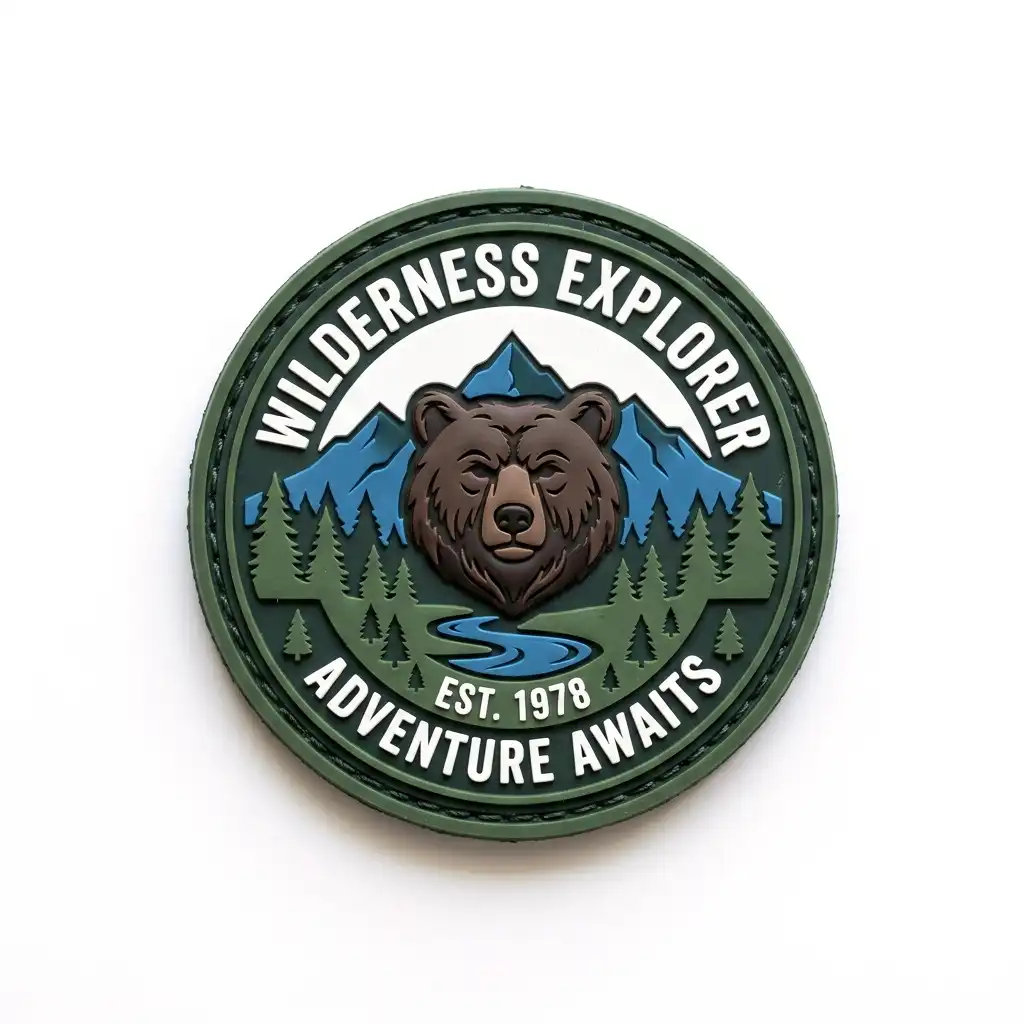
PVC
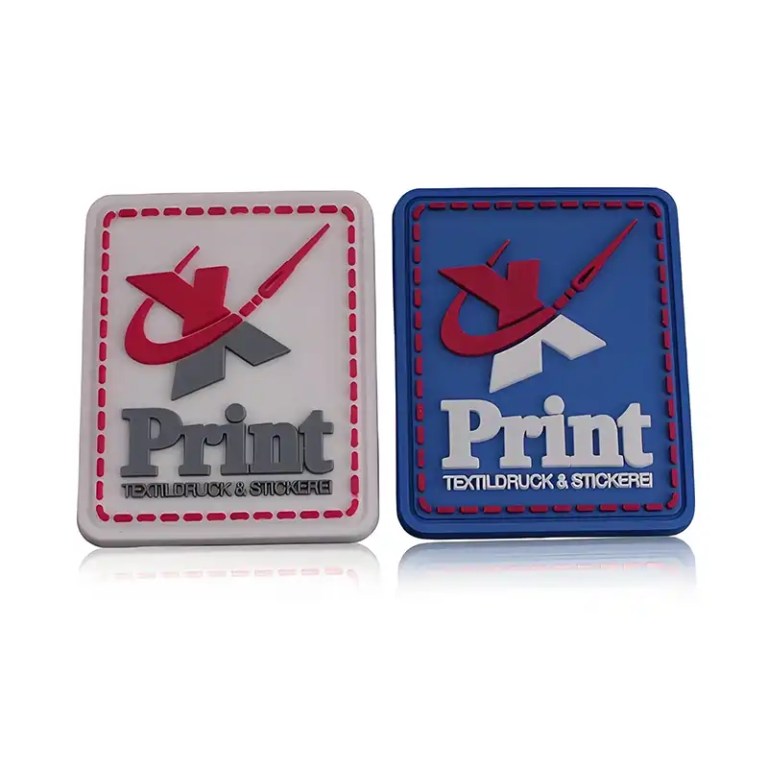
Molded soft rubber, waterproof and ultra-durable. Bold colors, raised edges; perfect for tactical and outdoor gear.
Explore PVCGet a Quote

Embroidered
Classic textured thread embroidery on fabric. Warm, premium look; the most popular choice for uniforms, clubs and events.
Explore EmbroideredGet a Quote

Woven
Fine threads woven flat for crisp detail and thin profile. Ideal for intricate logos, text and multi-color designs.
Explore WovenGet a Quote

Leather
Genuine leather with embossed or debossed artwork. Rugged, premium feel for jackets, hats and motorcycle gear.
Explore LeatherGet a Quote
Rush 3D PVC Patches
On a deadline? Include your quantity and required delivery date in your message or notes. We’ll check which patch styles, finishes and shipping options can meet your timeline.
3D PVC Patches Options
Compare finishes and features. Confirm compatibility with your selected style when requesting a quote.
- Merrowed — classic overlock edge, soft finish
- Heat-cut — clean edge, shows fine detail
- Laser-cut — complex shapes and small holes
- Sew-on — most durable, for uniforms
- Iron-on — quick, not for leather/towels
- Velcro — removable, police & military
- Adhesive — temporary, packaging
- Metallic gold / silver thread
- 3D puff (foam) effect
- Reflective and glow materials
- Button loop for hanging
- Pantone color matching
How to Order 3D PVC Patches
Five steps from choosing a style to approving the order.
01 – Choose a style
Pick a patch style, size and quantity.
02 – Send your design
Upload your logo or sketch and tell us where the finished pieces will be used.
03 – Review the mockup
We prepare a digital proof showing the shape, colors and finish.
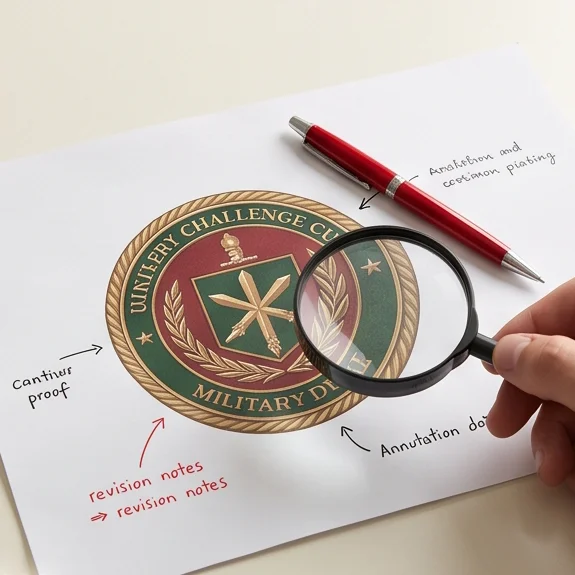
04 – Approve the proof
Check the details and request any revisions before approval.

05 – Confirm the order
Approve the quote and confirm delivery details before production starts.
Why Order 3D PVC Patches From MGM Crafts?
Work directly with our team on design, production and delivery.
Custom design service, completely free of charge.
Direct factory prices with no middleman.
Strict quality control for every product.
Fast shipping to get your order to you soon.
Service capabilities are robust.
Military Challenge Coins – Built for Service, Crafted for Legacy.
Every military challenge coin carries the bond between service members. We create bespoke coins that capture unit pride, mark milestones, and honor shared service moments. Our team understands the deep meaning behind these keepsakes and delivers durable, carefully finished pieces.
3D PVC Patches Production Process
See what happens after the proof is approved.
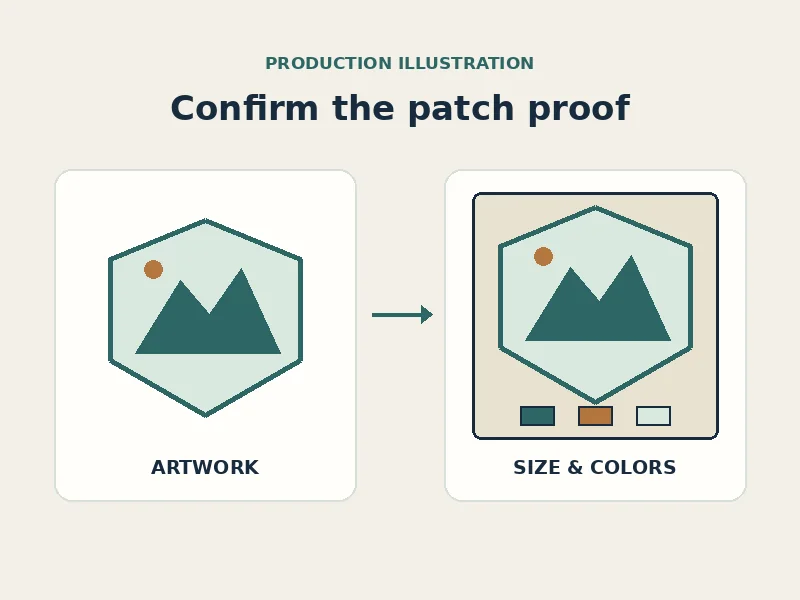
Confirm production specifications
The approved proof sets the size, outline and finish.
Digitize the artwork or prepare a mold
The design is prepared for stitching, weaving, embossing or molding.

Form the patch and add the backing
The material is shaped and finished, then the approved border and backing are applied.

Inspect and pack
Check the dimensions, color and finish, then pack the pieces for shipping.
3D PVC Patches FAQ
Common questions before ordering.
What are these patch designs used for?
Mold a layered rubber profile to distinguish foreground, border and background in the artwork. Typical uses include outdoor gear, tactical patches, brand badges.
Which patch type should I choose?
Embroidered patches have a classic textured look. Woven patches hold finer detail. PVC patches are waterproof and very durable. Leather patches give a premium, rugged look.
How is patch size measured?
Add the height and width and divide by two. For example, a 3″ × 4″ patch is (3 + 4) ÷ 2 = 3.5″.
Which backing should I choose?
Sew-on for uniforms, iron-on for quick application, hook-and-loop (Velcro) for removable use, and adhesive for short-term use.
Which border options are there?
Merrowed (overlock), heat-cut and laser-cut borders.
Can you match Pantone colors?
Yes. Send Pantone references with your artwork and we match them as closely as possible.
Is there a minimum order?
No. Small runs and repeat orders are both welcome.
Customer Reviews
See examples of completed projects, or tell us how your order turned out.
Already ordered from us? Share your feedback.
From Our Blog
Design ideas and practical advice for your next order.
PVC vs Embroidered Patches: Which Holds Up Better on Gear?
Read article →
Custom PVC Patches: 2D vs 3D Molding, Colors and Outdoor Durability
Read article →
Tactical Morale Patches: Sizes, Glow Options and Ordering Tips
Read article →Know MoreShow Less
How to design a 3D PVC patch with readable depth
Think of a 3D PVC patch as a small relief rather than a flat image made taller. The best use of depth is to separate a foreground feature from the background: the center of a mascot, the face of a crest or a shape that needs to catch the light. Decide what should stay flat before asking which features can stand out.
1. Assign levels to the design
Mark the background, the supporting shapes and the highest feature. For example, a mascot can sit above the ground, while its eyes and muzzle are modeled within the same face instead of needing another sharp step for every color. Carry lettering across a flatter strip if it must be clear. Read the guide to 2D and 3D PVC molding alongside the PVC patch gallery to compare layouts and color boundaries, not to assume all projects pictured use the same depth.
2. Compare round relief with simpler shapes
A larger rounded form can work on the center of a bag but feel out of place on a small sleeve panel. If your artwork is mainly lettering or a crisp border, the standard PVC patch collection may be a better fit than more pronounced relief. If you want raised texture on headwear and prefer thread, compare 3D embroidery as another way to draw attention to one mark. The PVC and embroidery comparison explains the material choice separately from the style of the artwork.
3. Match the profile to the surface it attaches to
Measure any available loop panel, including usable area close to the corners, and check whether the patch will need to bend or rub against straps. For a patch you swap between items, test the proposed outline on both. The gear patch planning article and the backing options guide offer examples of choices to discuss. Leave a border or a clean gripping edge if people will have to remove the patch often.
4. Ask for a proof that communicates the shape
Send the size, intended use, color references and a marked sketch of the important heights. Include one front view and, where possible, a rough illustration of the view from the side. The patch customization guide helps you describe the choices consistently. Inspect the proof where the tallest form meets the lettering and perimeter. If the same design is also needed in a smaller size, check whether that version would work better with simpler relief before approving two runs.
Check the design under lighting similar to where the patch will be used. Lighting from the side can show the sculpted form, but a small name in the shadow of a tall edge still needs to read. If the intended patch is to be worn on a moving strap or sleeve, use a side view to see whether the high areas project farther than you would like. A change to the slope can be more useful than making the whole patch larger.