

Custom Police Badges
Product Gallery
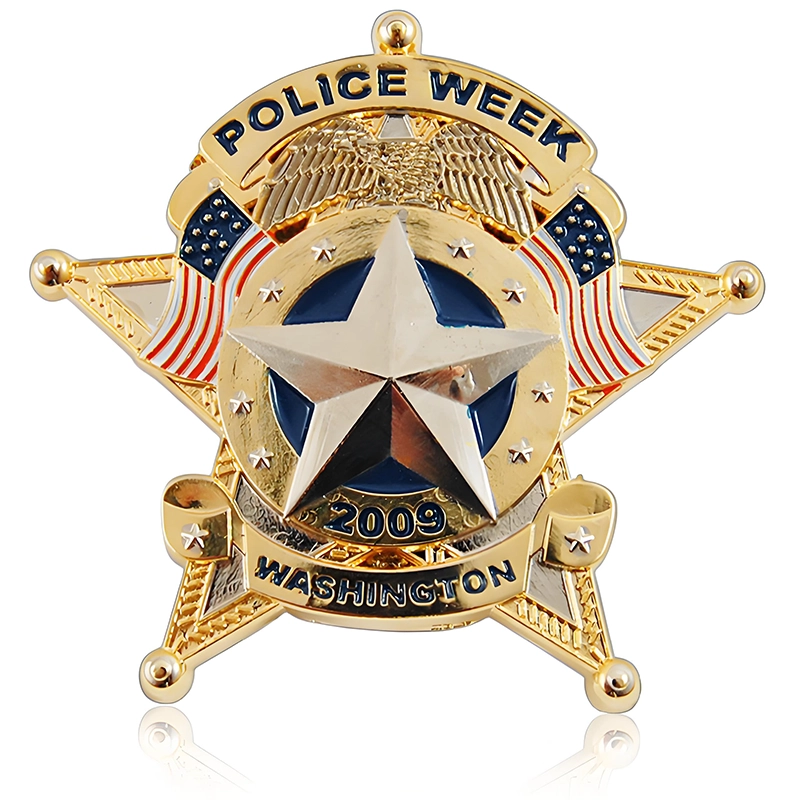


Custom Police Badges Applications

State Police Departments | County Sheriff’s Offices | Federal Law Enforcement Units | Municipal Police Agencies
Types Of Custom Police Badges

Custom Sheriff Badges

Custom Police Acodmy Badges

Custom Special Unit Badges

Custom Security Badges

Custom Detective Badges

Custom Retirement Badges
Our Standard Custom Police Badges Process

1. Send Your Reference or Idea
2. Design Proof & Confirmation
- Overall frame shape and structure
- Center emblem, department seal, or pattern
- Text including department name, rank, badge number, and dates
- Finish: gold, silver, two-tone, antique, or matte
3. Final Approval
4. Mold Making & Production
We create precision molds based on your final design, then produce your custom pilice badges with quality metal stamping, coloring, and plating.
5. Quality Check & Delivery
Custom Police Badges Options
Running out of time? Craving your own custom coins quickly? Our premium rush service supports 1-piece customization. We have 24-hour production and fast worldwide shipping so you can get your coins without delay.
GET A FREE QUOTE
✓ Custom Text Engraving
✓ Badge Number Personalization
✓ Custom Shapes & Sizes
✓ Special Features
✓ Closure Options
The Advantages of MGMcrafts

Custom design service, completely free of charge.

Direct factory prices with no middleman.

Strict quality control for every product.

Fast shipping to get your order to you soon.
FAQ
How much do custom police badges cost?
How long does it take to make a custom badge?
What's the minimum order for custom badges?
How do I place an order for custom badges?
How do I design a custom badge?
Can MGMcrafts duplicate my department's existing badge design?
What are the font options for custom badge lettering?
Can I change the engraved lettering on my badge?
What's the difference between One-Piece and Applied Panel badges?
Why should departments design anniversary badges?
What's the difference between One-Piece and Applied Panel badges?
What materials are police badges made of?
Premium badges are crafted from solid brass, zinc alloy, or pewter. Solid brass offers durability and classic weight. Zinc alloy provides cost-effective quality. Pewter is lighter with a distinctive silver-gray finish.
What is the difference between soft enamel and hard enamel?
Hard Enamel is fired at high temperatures, creating a smooth, flush finish with the metal. Soft Enamel leaves recessed areas with a textured feel and vibrant colors. Hard enamel offers superior durability and professional polish.
What's the difference between Shell Back and Solid Back badges?
Shell Back badges are hollow with a smooth back surface – lighter and more affordable. Solid Back badges are solid metal throughout, offering substantial weight and premium feel preferred by many departments.
What electroplate finishes are available?
Common options include Gold (classic shine), Silver (bright polish), Nickel (durable silver tone), Antique Brass (aged appearance), and Black Nickel (tactical dark finish). Each offers unique aesthetics and durability.
What's the difference between non-plated and plated badges?
Non-plated badges show the natural metal color (usually brass). Plated badges have a surface coating for color and protection. Plating enhances appearance, prevents tarnishing, and extends badge lifespan.
What types of brass alloys are used in badge manufacturing?
Common alloys include C260 (cartridge brass – 70% copper, 30% zinc) for standard badges, C220 (commercial bronze) for warmer tones, and specialized alloys for specific applications. All chosen for durability and finish quality.
When is a badge curved or flat?
Most pocket badges are slightly curved for chest comfort. Hat badges are typically flat to mount securely. Curved badges reduce glare and fit uniforms better. Some tactical designs use flat profiles for low profile.