


Table of Contents
Customer Loyalty Challenge Coins: How Brands Turn First-Time Buyers Into Lifelong Fans
Customer loyalty challenge coins are the tactile counterpart to the digital loyalty program. Where a points app lives on a phone and gets forgotten, a coin lives in a wallet, on a keychain, or in a kitchen drawer for years. The format is the same one militaries and first responders have used for a century: a small metal token that marks membership in a group. The translation to retail, service, and subscription brands is straightforward, and the retention numbers beat most digital loyalty programs by a wide margin. This guide covers what makes loyalty coins work, how tiered programs are structured, the design choices that make a coin worth carrying, and the operational decisions that separate a coin program customers collect from a coin program that ends up in a back room.
What Are Customer Loyalty Challenge Coins?
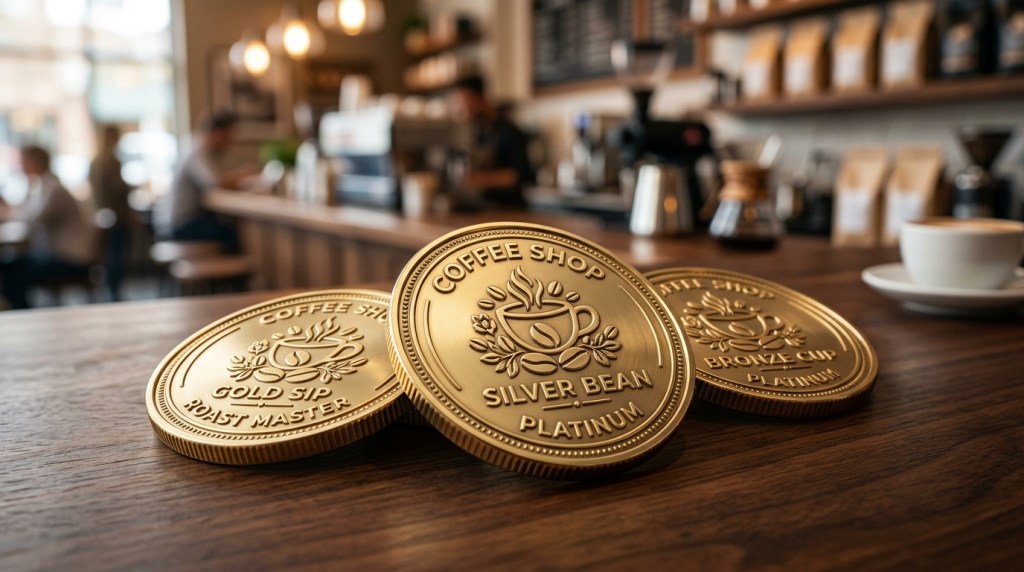
A customer loyalty challenge coin is a 1.5″ to 2″ custom metal coin issued by a brand to mark customer status, achievement, or membership. The coin is the artifact of a relationship: a customer’s first purchase, a loyalty tier promotion, a milestone visit, or a special event. The brand issues the coin; the customer carries it. The coin becomes the physical signal of belonging that the customer shows at the counter, scans at checkout, or wears on a keychain to spark a conversation.
Loyalty coins are most common in coffee shops, craft breweries, fitness studios, beauty salons, barbershops, gaming stores, and specialty retailers, but the format works anywhere a brand has a repeat-customer relationship. The strongest programs are the ones where the coin is the customer’s proof of belonging and the brand’s proof that they remember the customer by name.
Why Customer Loyalty Coins Work When Digital Programs Don't
Three structural differences separate a coin from a points app.
Tactile retention. A points balance lives in an app that the customer opens once a month and then forgets. A coin lives in a pocket, a wallet, or on a keychain. Every time the customer reaches for the wallet or the keys, the coin is in hand. The physical object re-anchors the brand in the customer’s day without any marketing spend.
Conversation starter. A loyalty app badge has no social presence. A coin is something the customer shows to friends, family, and coworkers. The coin is a story: “I’ve been going to this coffee shop for five years and they gave me this when I hit 100 visits.” The story spreads the brand through word-of-mouth in a way a digital notification does not.
Tier signal visible to staff. When a customer walks into a coffee shop and produces a coin at the counter, the barista knows the customer by tier. The customer does not need to scan anything, open an app, or recite a phone number. The coin is the loyalty card, the membership card, and the recognition signal in one object.
Tiered Loyalty Coin Programs
Most successful loyalty coin programs use three or four tiers, with each tier represented by a distinct coin design.
Tier 1 — Welcome (entry-level). Issued on the customer’s first purchase or sign-up. The coin signals that the customer is now a member of the brand’s community. Designs are typically the brand’s primary logo and color, polished or antique silver, 1.5″ to 1.75″ diameter.
Tier 2 — Regular (mid-tier). Issued after a defined milestone (10 visits, $200 spent, six months as a customer). The coin is a different finish or color from Tier 1 — often antique copper or black nickel — and may carry the customer’s first name or a serial number.
Tier 3 — VIP (high-tier). Issued after a longer milestone (50 visits, $1,000 spent, one year). The coin is the most premium in the program: dual-plated gold and silver, heavier weight, sometimes a 2″ diameter. The coin may carry a personal inscription from the owner or a numbered edition.
Tier 4 — Founder or Lifetime (top-tier). Issued to the brand’s most loyal customers after years of repeat business. The coin is typically a one-of-a-kind design, presented in a gift box with a handwritten note. Founder coins are the artifacts customers display and treasure.
| Tier | Trigger | Finish | Typical Diameter |
|---|---|---|---|
| Welcome | First purchase / sign-up | Polished silver | 1.5″ to 1.75″ |
| Regular | 10 to 25 visits | Antique copper or black nickel | 1.75″ |
| VIP | 50 to 100 visits or $1,000 spent | Dual-plated gold and silver | 2″ |
| Founder | Years of loyalty, by invitation | Custom one-of-a-kind | 2″ or larger |
Industries Where Loyalty Coins Work Best
Five industry verticals have the strongest loyalty coin programs.
Coffee shops and cafés. The classic example. A neighborhood coffee shop with 200 regulars can issue coins to each regular and create the recognition culture that turns the shop into a “third place.” The coin sits on the counter; the barista sees it; the customer feels seen.
Craft breweries. Brewery loyalty coins mark the customer as a “founder’s club” member, a taproom regular, or a mug club holder. The coins often carry the brewery’s signature beer, the customer’s name, and a serial number. Taproom regulars display the coins on a pegboard behind the bar.
Fitness studios. Yoga, pilates, spin, CrossFit, and martial arts studios issue coins for class milestones (100 classes, 500 classes, instructor certification). The coin is the artifact of the customer’s progression and is often more meaningful than a digital badge.
Barbershops and salons. Loyalty coins mark the customer as a “chair regular.” The coin is presented at the chair; the barber or stylist sees it and starts the conversation. The coin is the brand’s way of saying “we know you.”
Specialty retail. Bookstores, board game stores, comic shops, plant nurseries, and vintage shops issue coins to repeat customers. The coin is the artifact of the customer’s relationship with a small business.
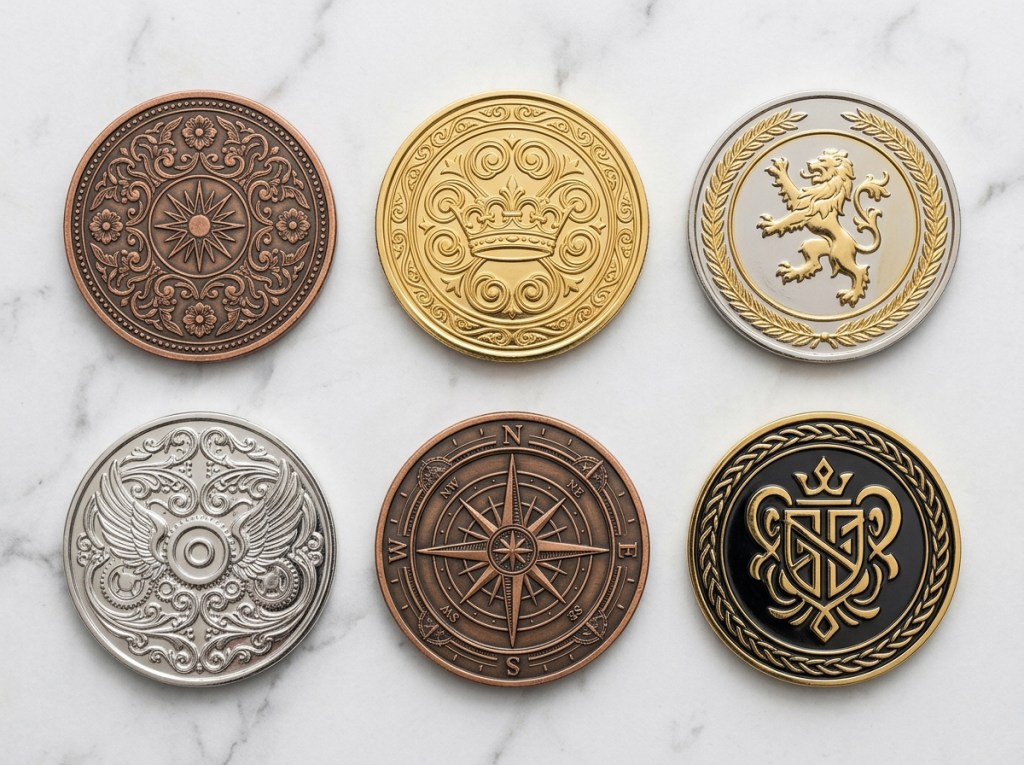
Design Choices That Make a Loyalty Coin Work
Five design decisions separate a coin a customer carries from a coin that ends up in a drawer.
Use the brand’s primary colors in the enamel. The coin should be visually identifiable as the brand. A coffee shop with a deep green and gold brand should not order a coin in blue and white. The enamel colors are the visual handshake.
Engrave the tier name on the coin. A coin that says “VIP” on the back is a coin that means something at the counter. A coin that just has the brand logo is a souvenir. The tier name is what makes the coin functional as a recognition signal.
Add a serial number for higher tiers. Serial numbers make the coin collectible and create a sense of rarity. A customer who knows there are only 100 VIP coins in circulation treats their coin differently than a customer with one of 10,000 generic coins.
Skip the QR code. Loyalty coins do not need a QR code to a points page. The coin is the recognition token. A QR code is a distraction from the design and a step back to the digital model the coin is meant to replace.
Make the coin weight match the tier. Tier 1 coins can be 1.5mm thick; Tier 3 coins should be 2.5mm to 3mm thick. The heavier the coin, the more it feels like a premium object. The weight is part of the experience.
Presentation Moments That Give Loyalty Coins Meaning
The coin is the artifact; the moment it is presented is the experience. Five presentation moments are the strongest.
First-purchase coin. The customer makes their first purchase. The barista or cashier hands the customer a coin and says “Welcome to the family.” The customer is now a member, not just a buyer.
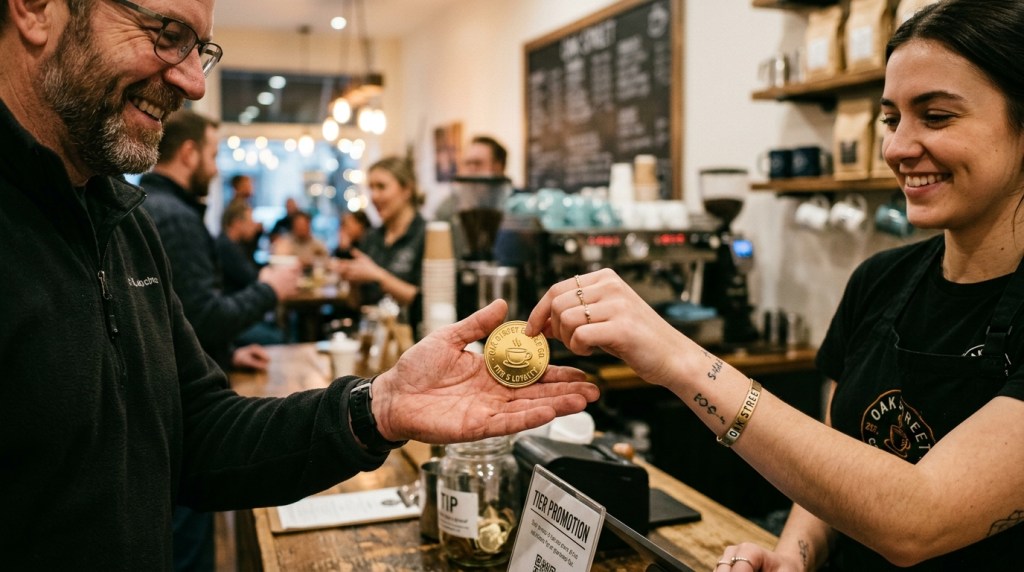
Tier promotion. The customer crosses a milestone (10th visit, 50th visit, $1,000 spent). The owner or manager hands the customer the new coin personally, with a brief congratulation. The presentation is the moment the customer remembers.
Anniversary coin. The customer has been with the brand for one year, three years, five years. The brand produces an anniversary coin and presents it on the anniversary date. The customer feels recognized.
Event coins. The brand produces a special coin for a launch event, anniversary party, or seasonal promotion. The coin is given to attendees as a thank-you. The coin is the artifact of the event.
Founder or lifetime coins. The brand’s most loyal customers receive a custom coin presented by the owner, often in a gift box, often with a handwritten note. These presentations become the brand’s signature story.
Common Mistakes When Ordering Loyalty Coins
Four mistakes come up across loyalty coin programs of every size.
Ordering too few coins. A coffee shop with 200 regulars needs at least 250 Tier 1 coins to start. New customers who come in during the program launch need a coin immediately. Running out within the first month kills the momentum.
Letting the coin design take too long. A coin program that takes six months to launch loses momentum. Order a simple Tier 1 coin first and add tiers later. The program matters more than the design polish.
Forgetting to brief the staff. The coin program only works if the staff knows what the coin means and how to present it. Brief the team before launch: when to hand out the coin, what to say, how to recognize customers at the counter.
Ordering coins without a serial number strategy. If higher-tier coins have serial numbers, decide the numbering system in advance. A “1 of 100” serial is more meaningful than a random number. Plan the system before ordering.
How Many Loyalty Coins to Order
The standard rule covers most loyalty programs. Order the number of regular customers plus 25% to 40% extras for new customers, replacement coins (lost or stolen), gifting, and event coins. For a coffee shop with 200 regulars, that is 250 to 280 Tier 1 coins for the first year.
Tier 2 and Tier 3 coins are ordered in smaller quantities because the milestone threshold reduces the eligible customer pool. A Tier 2 coin for customers who hit 25 visits might need 50 to 80 coins in the first year of the program. Tier 3 and Tier 4 coins are even smaller.
Operating a Loyalty Coin Program
Three operational decisions determine whether the program thrives or stalls.
How to track tier progression. Most small businesses track tier progression by hand: a tally on a loyalty card, a note in the POS, a spreadsheet. The coin does not need to be tracked digitally; the customer’s tier is in the barista’s memory or a simple system.
When to issue the next-tier coin. Tier promotion should happen at the moment the customer crosses the threshold, not at the next visit. The customer comes in for their 25th visit, the barista hands them the Tier 2 coin on the spot. Waiting until the next visit loses the impact.
What to do with lost coins. Lost coins should be replaced at the customer’s next visit at no charge. The replacement is part of the brand’s commitment to the customer. Charging for a replacement coin undermines the program’s purpose.
Conclusion
Customer loyalty challenge coins turn first-time buyers into lifelong fans by giving the relationship a tactile anchor the customer carries every day. The strongest programs use tiered designs, brief the staff on presentation moments, and treat the coin as the recognition signal that replaces a digital points app. For brands planning their first loyalty coin program, the natural starting point is to look at how custom challenge coins are designed for retail and service use cases specifically. The design language and the lead times are the same, but the tier system, the serial numbering, and the staff briefing get tuned for the brand’s customer base.
Frequently Asked Questions
How is a customer loyalty challenge coin different from a punch card or a points app?
A punch card and a points app live in a wallet or on a phone, and they measure transactions. A loyalty coin lives in a customer’s hand or on a keychain, and it measures belonging. The coin is a tactile signal that the customer is recognized as a member of the brand’s community, not just a frequent buyer. The retention difference comes from how often the customer encounters the object: a punch card is glanced at; a coin is held.
Can a small business afford a loyalty coin program?
Yes. A Tier 1 coin costs $3 to $8 per unit at a minimum order of 100 to 250 coins. A coffee shop with 200 regulars can launch a Tier 1 program for $600 to $2,000. Higher tiers are ordered in smaller quantities at slightly higher per-unit cost. The total program cost is a fraction of the annual revenue from a regular customer base, and the retention uplift typically covers the program cost in the first six months.
Should loyalty coins be numbered?
Lower-tier coins (Tier 1, Tier 2) typically do not need serial numbers; they are produced in quantities that match the customer base, and every regular customer has one. Higher-tier coins (Tier 3, Tier 4) benefit from serial numbers because they signal rarity and become collectible. A “1 of 50” serial on a VIP coin turns the coin from a recognition token into a collectible artifact.
What is the best size for a loyalty coin?
Tier 1 coins are typically 1.5″ to 1.75″ in diameter for comfortable everyday carry. Tier 3 and Tier 4 coins are typically 2″ for a more substantial feel. Avoid going larger than 2.25″ for a coin that needs to fit in a customer’s pocket or wallet; the customer will leave it at home if it does not carry easily.
How long does it take to produce loyalty coins?
Production lead time is typically 4 to 6 weeks after the proof is approved. For a launch tied to a specific date (a brand anniversary, a holiday season, an event), order the coins at least 8 weeks before the launch. Rush orders of 2 to 3 weeks are available at a 30% to 50% surcharge. The brand should have the staff briefing and the tier-tracking system ready before the coins arrive, so the launch happens the day the shipment arrives.
